1987
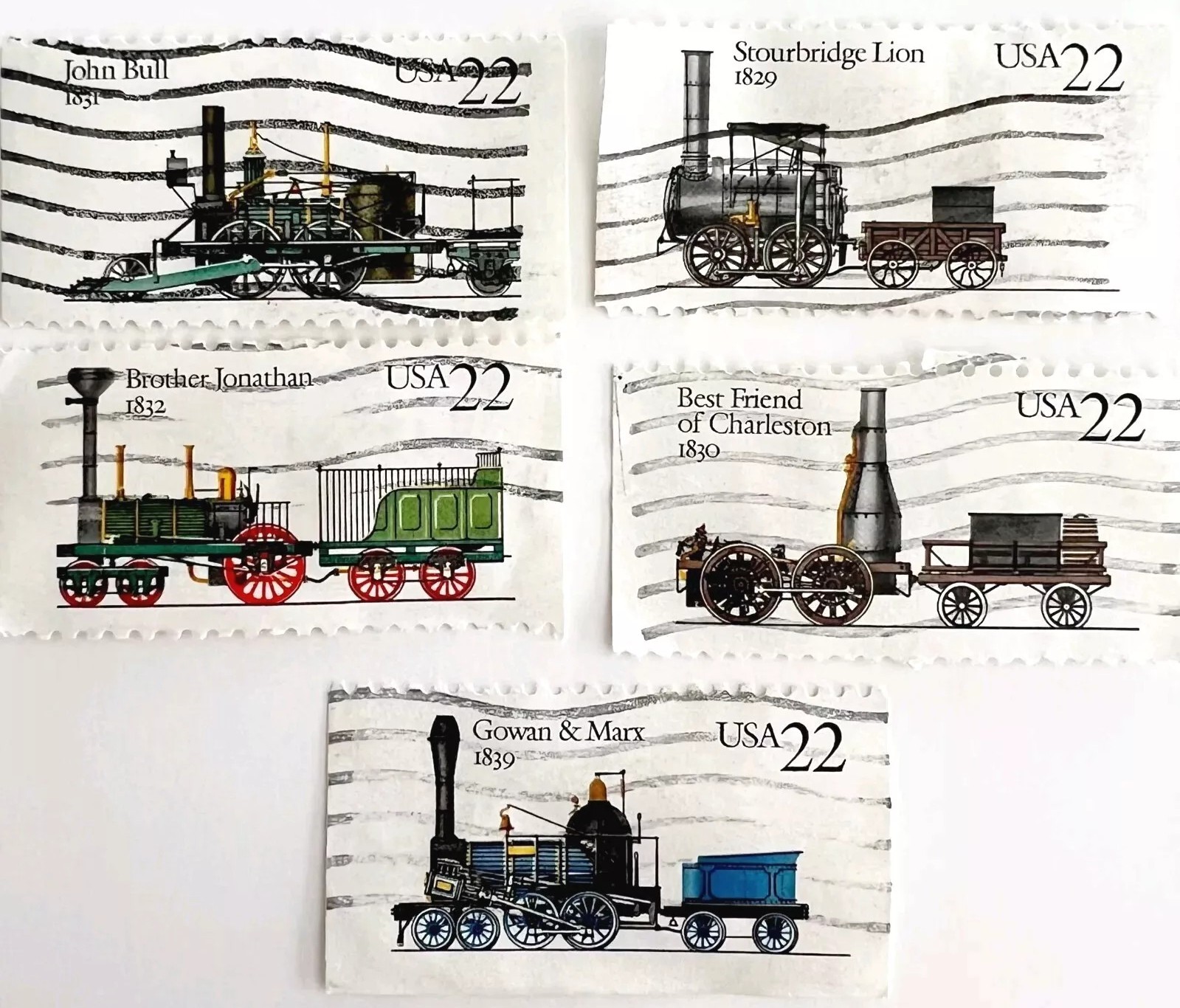
Historic Locomotives have been
pictured on 1987 U. S. postage stamps:
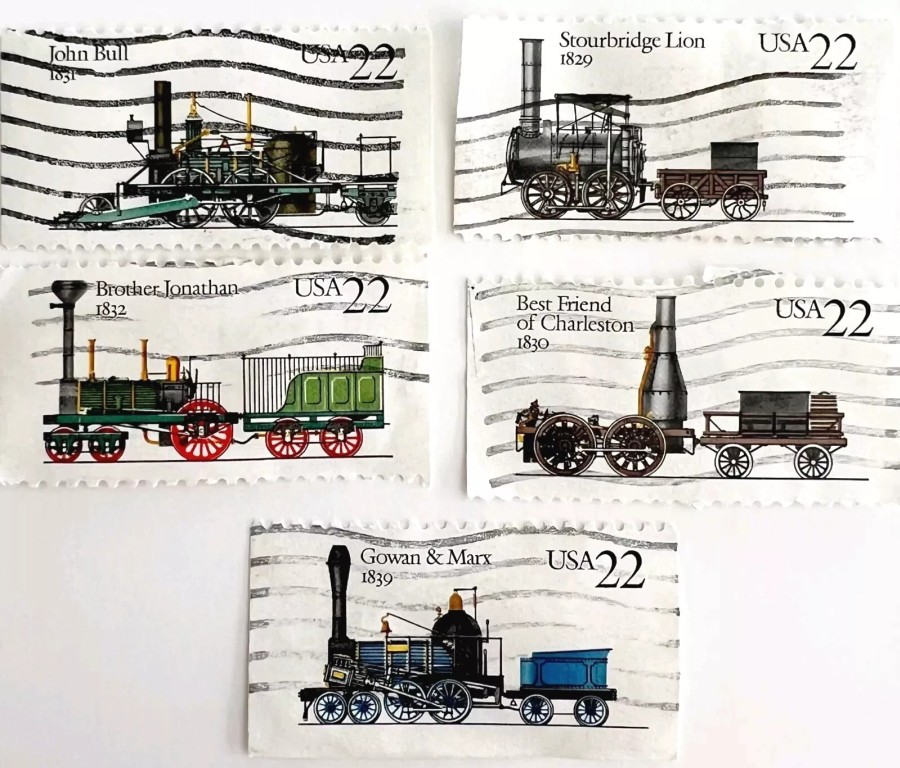
(you may click to view larger images of these
cancelled stamps seen above.)
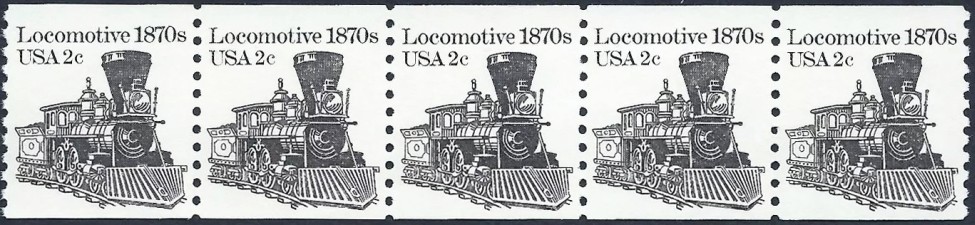
These coils stamps which show an 1870 era locomotive,
are also from 1987.
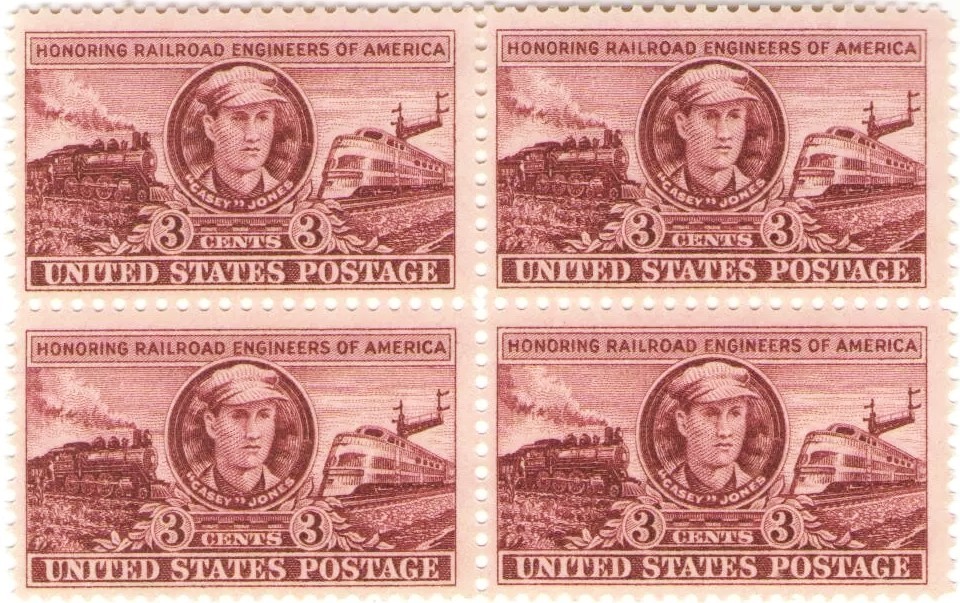
1950
These 3 cent stamps honoring the Railroad Engineers
of America
and featuring the railroad legend Casey
Jones, were printed for use in 1950.
1998
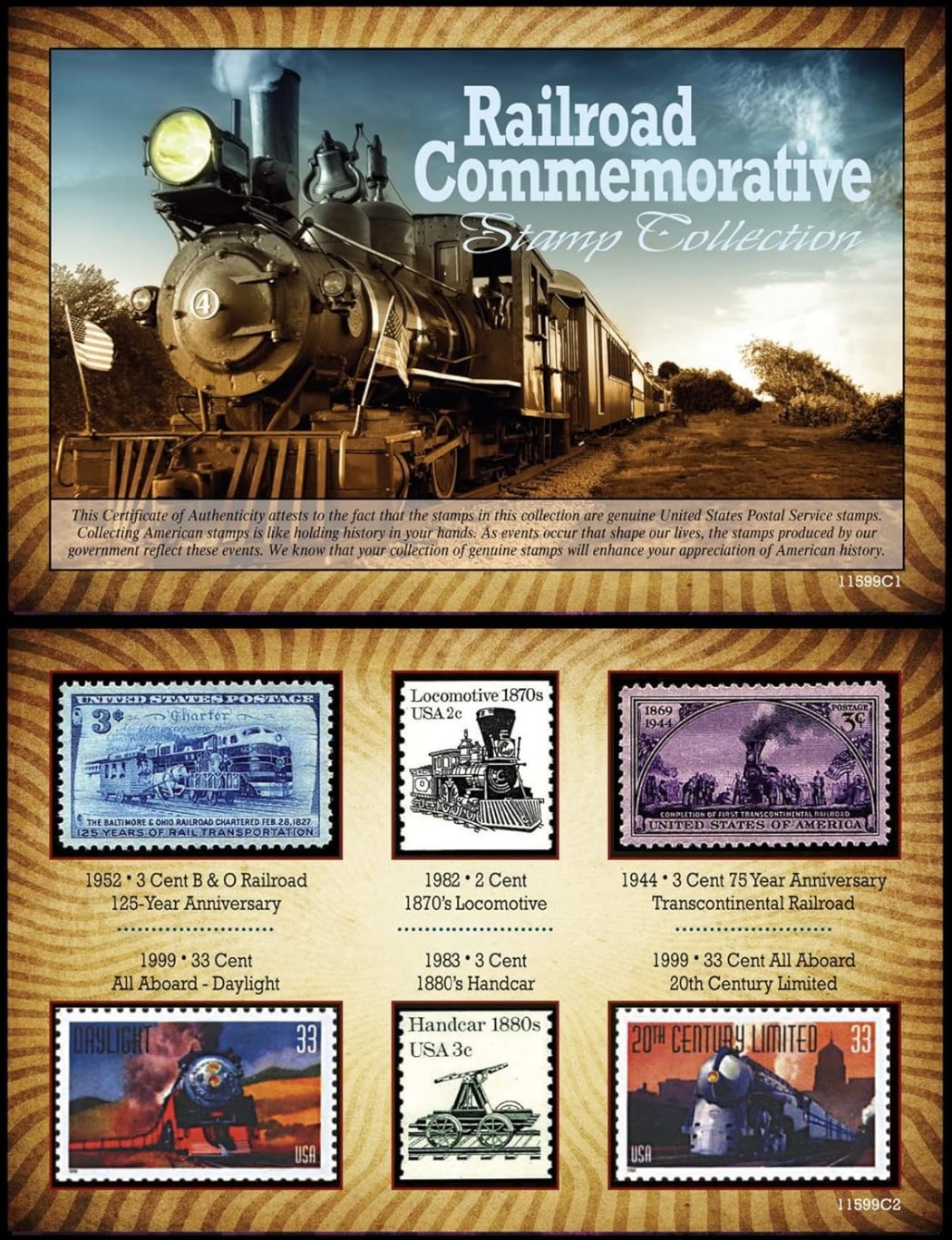
1998 All Aboard Railroad
Stamps
In 1998,
the United States Postal Service issued several train-themed stamps, most
notably the "All Aboard! Trains" series
(33 cents, Scott #3333-3337)
featuring five famous American trains in a sheet of 20.
A set of five stamps (33¢)
was released, featuring watercolor paintings of famous American locomotives.
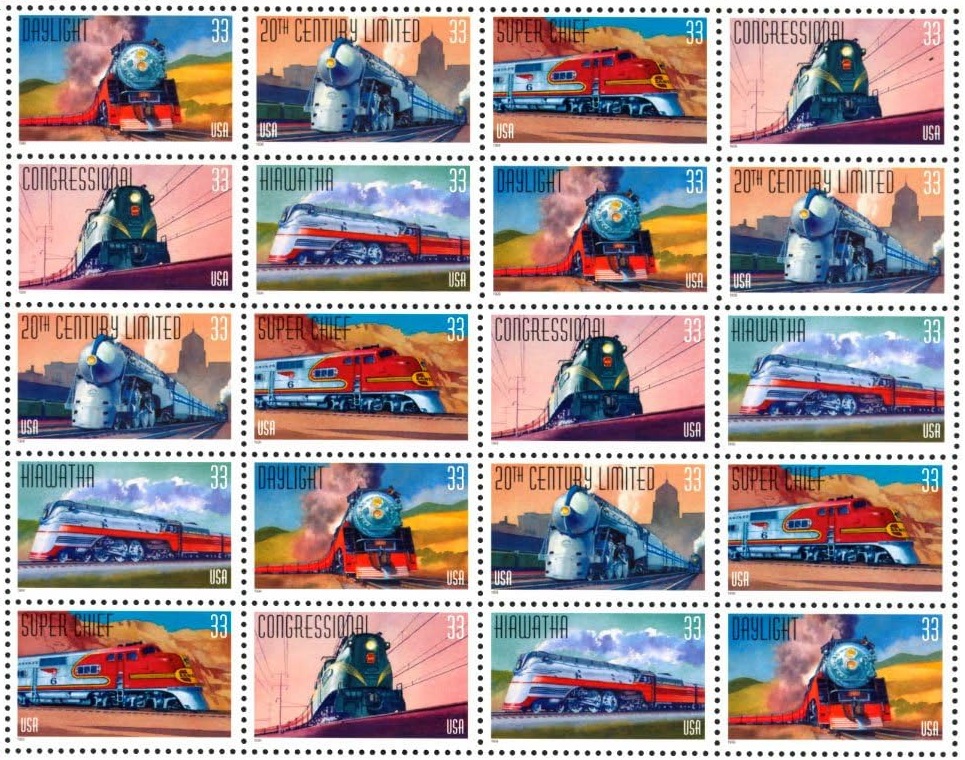
Released on August 26, 1999,
in Cleveland, Ohio, the set highlights famous 1930s-1940s trains,
including the Daylight,
Congressional,
20th
Century Limited, Hiawatha, and
Super Chief.
2019
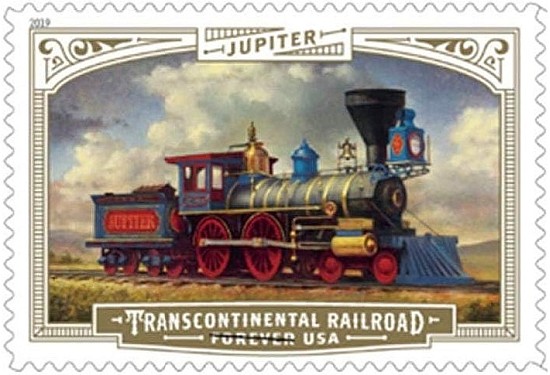
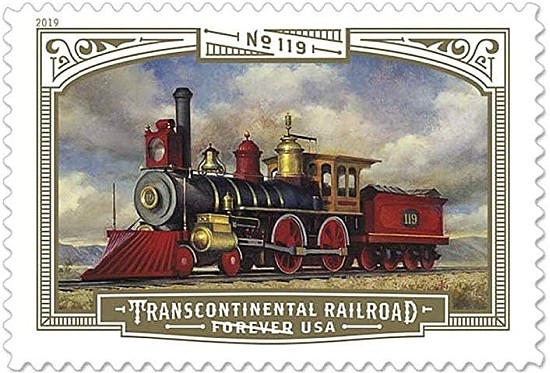
Transcontinental Railroad Commorative Forever
Stamps
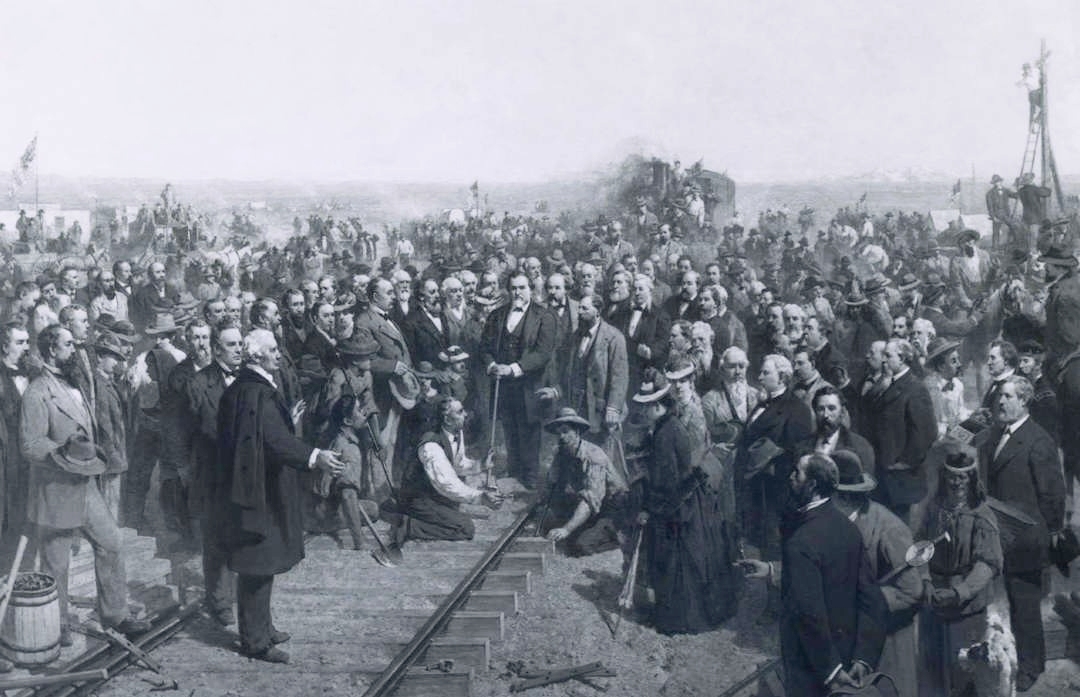
Marking the 150th anniversary
of the completion of the transcontinental railroad, the U.S. Postal Service
commemorated this 19th century marvel with a magnificent set of Forever
stamps. They were issued Friday, May 10, 2019 at 3:30 p.m.
Mountain time at the Golden Spike National Historic Site, 6200 North
22300th Street, West Promontory Summit, UT 84037.
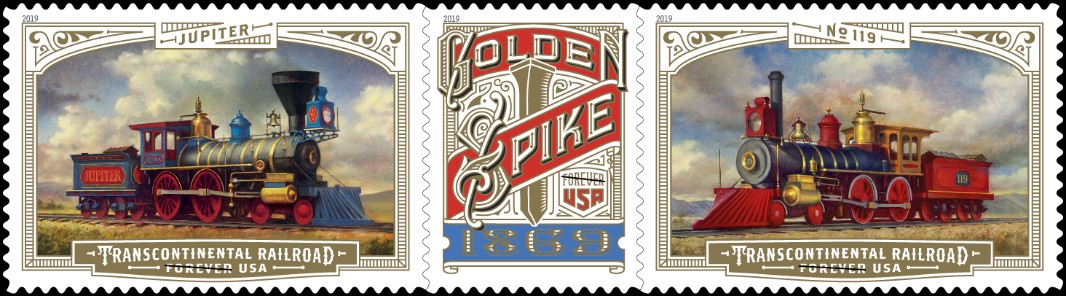
Reminiscent of traditional
19th century oil painting techniques, the three distinct designs of the
Transcontinental Railroad Forever stamps evoke the spirit of the era.
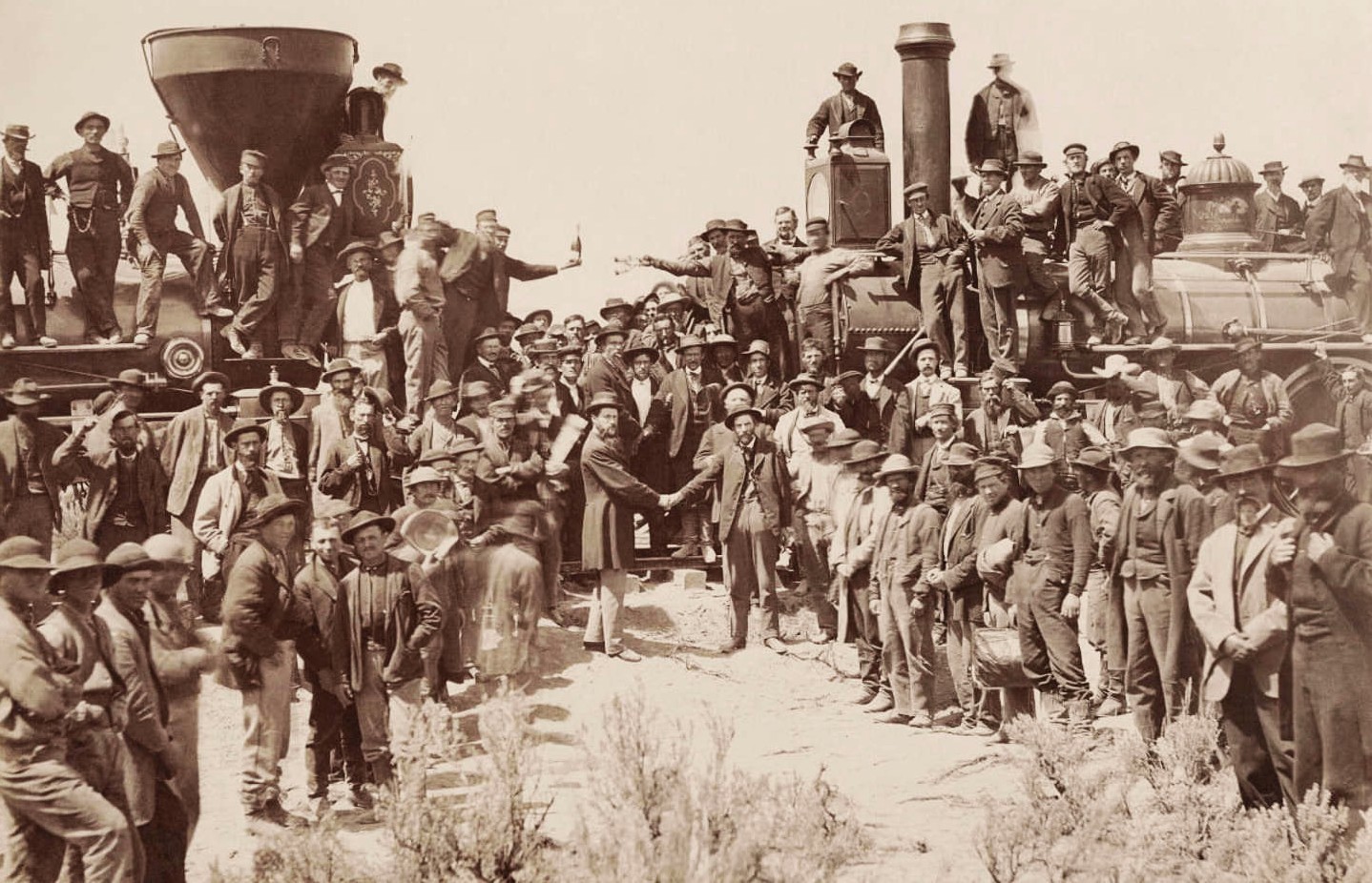
Two separate stamps feature the Jupiter and the No. 119 locomotives that
powered the trains carrying the officers and guests of the two train companies
to the “Golden Spike Ceremony.” Centered between them, a third
stamp portrays the famous golden spike that was a prominent part of the
ceremony.
They could be used indiviually.
They could be posted together.
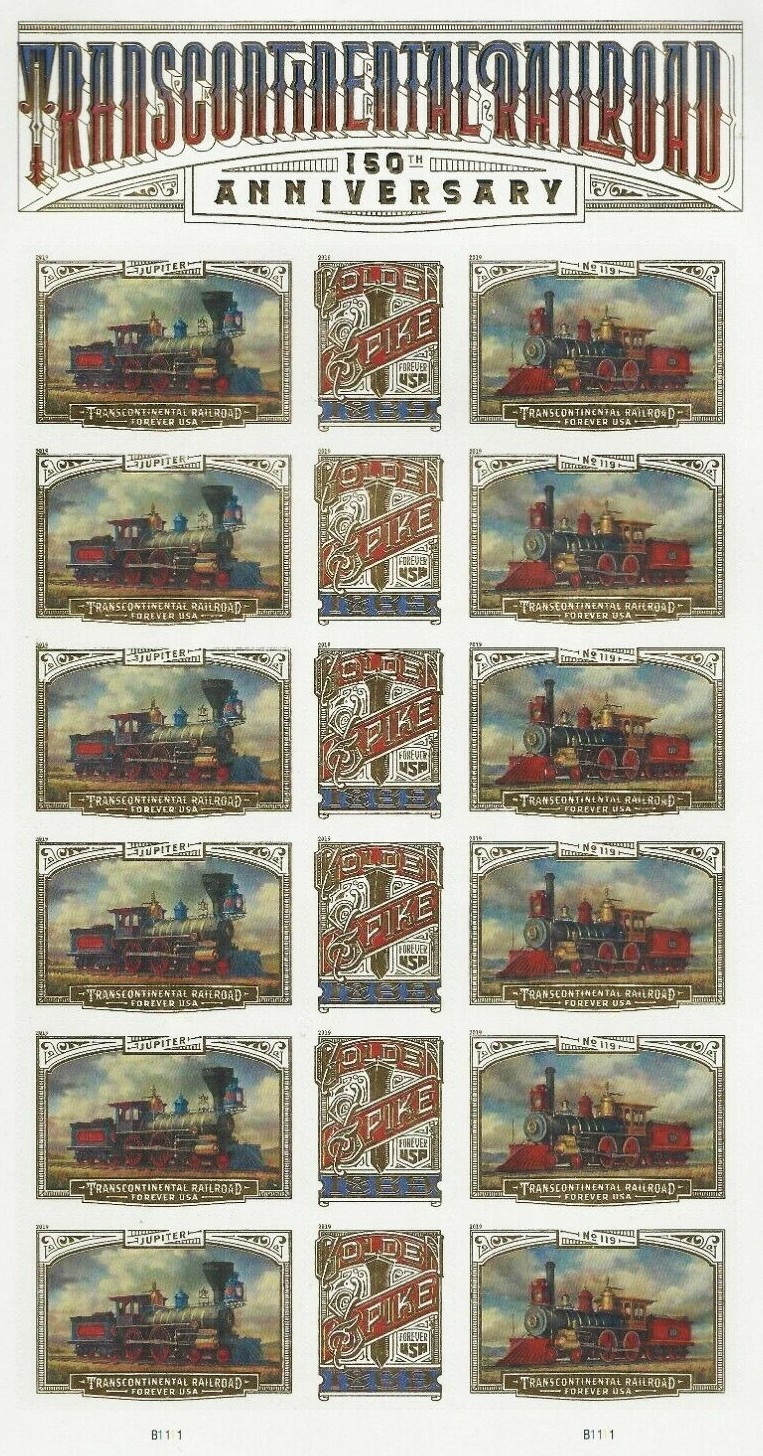
They were printed as a sheet.
|